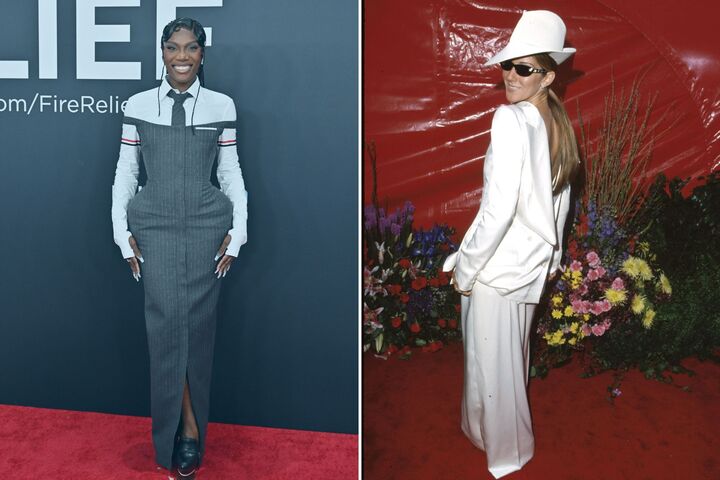
The Met Gala’s theme dropped with its usual spectacle—but this time, without clear direction. No decade, no designer tribute, no obvious aesthetic lane. Instead, fashion’s biggest night leaned into ambiguity, leaving stylists scrambling to decode what to dress stars in. The result? A creative free-for-all spanning from sheer “naked” dresses to tailored ensembles inspired by the Mona Lisa.
This isn’t just about red carpet glamour. It’s about narrative construction—how stylists translate vague cultural prompts into wearable art. And this year, with no clear rules, the real challenge was restraint. How do you balance bold interpretation without veering into costume? We spoke to six top celebrity stylists behind some of fashion’s most iconic Met moments to reveal how they’re navigating the most open-ended theme in recent memory.
The Theme That Wasn’t: Stylists Grapple
With Creative Freedom
This year’s Met Gala theme wasn’t a directive—it was an invitation. Without a defined historical period or movement, stylists were handed a blank canvas. That freedom, however, brought pressure. “The hardest thing isn’t following rules,” says Lena Cho, stylist for Florence Pugh and Regina King. “It’s creating your own rules and making them feel intentional.”
For Cho, the lack of specificity meant doubling down on storytelling. “We started with one question: What does ‘art as armor’ look like on a modern woman?” Her answer? A custom Schiaparelli gown with hand-embroidered gold thread mimicking brushstrokes, paired with a sheer bodice that blurred the line between vulnerability and strength.
Others leaned into duality. “The theme wasn’t just ‘art’—it was about how we wear it,” says Marcus Reed, who dressed Donald Glover. “So we asked: What if he’s not wearing art, but embodying it? Like a living sculpture.” The result: a monochrome, liquid-metal look from Balenciaga with asymmetrical draping that evoked both Da Vinci’s sketches and modern minimalism.
The absence of a narrow theme opened doors—but also pitfalls. Several stylists admitted early drafts veered into literalism. “We pitched a Starry Night wrap dress,” laughs Zahra Silver, who works with Zoe Kravitz. “Then we realized: that’s a costume. We pulled back and focused on texture—indigo ombré silk with hand-twisted pleats to mimic swirls.”
Naked Dresses Reimagined: Sheer as Statement
Few elements at the Met Gala spark more debate than the “naked” dress—sheer fabrics layered over strategic nude underpinnings. This year, that trend didn’t just return—it evolved. Stylists used transparency not for shock value, but as a metaphor for exposure, authenticity, and the rawness of creation.
“The sheer dress has been done,” says Aria Teng, who styled Lily James. “But this time, we treated it like a sketch—unfinished, revealing the structure beneath.” Her design, a custom Loewe piece, featured a bodice of hand-cut lace over a second-skin mesh, with visible boning that mimicked an artist’s underdrawing.
Teng’s approach reflects a broader shift: sheer is no longer about skin—it’s about process. “We’re showing the draft, the bones, the rough pass,” she explains. “It’s like hanging a painting with the canvas stretched but not yet primed.”
Other stylists took a bolder route. One A-lister arrived in a fully transparent column gown lined only with strategically placed floral appliqués—reminiscent of classical nudes draped in nature. “It wasn’t about nudity,” the stylist insists. “It was about the tradition of the unclothed form in art. Think Botticelli, not Instagram.”
Still, the risk remains. Misjudged sheer dressing reads as cheap rather than conceptual. Key pitfalls? Poor fit, mismatched under-layers, or over-accessorizing. “If you’re going sheer, the body must be the focal point—nothing competes,” says Silver. “No loud jewelry. No dramatic hair. Just the silhouette.”
The Mona Lisa Effect: Quiet Luxury Meets Art History
While some embraced spectacle, others looked to the Mona Lisa—not as a literal costume, but as a mood. The result? A wave of “quiet luxury” looks channeling Renaissance restraint, enigmatic expression, and the power of subtlety.
“She didn’t wear feathers or crystals,” says Cho. “She wore a dark dress, a faint smile, and changed art forever. That’s the energy we wanted.”
Her client’s look—a high-neck, floor-length column in raw silk, with a single gold chain echoing da Vinci’s use of light—was praised for its restraint. “We called it ‘the smile,’” she says. “Everything was minimal except the expression. The dress was a frame for presence.”
This trend reflects a growing fatigue with over-the-top Met Gala aesthetics. “For years, it was about who could wear the tallest headpiece or the wildest theme park ride on their back,” says Reed. “Now, people want meaning. The Mona Lisa is the ultimate power move because it’s so quiet.”
The stylist for Riz Ahmed took a similar route: a deep brown, double-breasted suit with a hidden jacquard lining depicting The Last Supper in micro-detail. “You had to get close to see it,” he says. “That’s the point—art isn’t always for the crowd. Some of it’s for the wearer.”
Bridging Eras: When Old Masters Meet Streetwear
Not all interpretations were reverent. Some stylists fused classical art references with contemporary streetwear, creating tension between high and low culture.
“The Met theme didn’t say ‘be respectful,’” says Silver. “It said: interpret. So we asked—what if Basquiat met Botticelli?”
Her answer: a hybrid look for a young rapper that paired a linen tunic printed with Renaissance cherubs, layered over distressed denim and custom Nike high-tops hand-painted with gold leaf. “It’s irreverent, but intentional,” she argues. “Art isn’t frozen. It evolves.”
Others followed suit. One actress arrived in a corseted top inspired by 16th-century portraiture, but paired with cargo pants and combat boots. “We wanted to show that armor doesn’t have to be lace and silk,” says her stylist. “Sometimes it’s utility. Sometimes it’s defiance.”
This collision of worlds isn’t new—but this year, it felt more deliberate. “Streets have always been a canvas,” says Teng. “Graffiti, murals, even fashion tags. So why can’t a hoodie be as valid as a Titian?”
The risk, of course, is dissonance. “When you mix eras, one element has to lead,” warns Cho. “Otherwise, it’s just costume soup. Either the Renaissance is the base and streetwear accents it, or vice versa. You can’t split the difference.”
The Stylist’s Toolkit: 5 Elements That Made or Broke the Looks
Behind every successful Met Gala outfit is a structured creative process. Based on interviews, here are the five non-negotiables top stylists used to translate ambiguity into impact:
- Narrative First
- Every look began with a story—“a single sentence we could pitch in an elevator,” says Reed. Example: “A modern muse stepping out of a Caravaggio painting.”
- Material as Metaphor
- Fabric choice wasn’t aesthetic—it was symbolic. Sheer mesh for vulnerability, polished metal for permanence, raw silk for unfinished creation.
- Restraint in Accessorizing
- With so much conceptual weight, accessories were minimized. “One piece. One moment,” says Teng. “A single earring shaped like a paintbrush. A ring with a tiny framed portrait.”
- Collaborative Design
- Most looks were custom, co-developed with designers. “We didn’t just order a dress,” says Cho. “We built it—fabric swatches, sketch meetings, mood boards with art references.”
- Fit as Foundation
- “No concept survives a bad fit,” says Silver. “We had three fittings, padding tests, even walk-throughs in heels. If it didn’t move right, it didn’t happen.”
Why This Theme Worked—Despite (Or
Because Of) the Ambiguity
The lack of a narrow theme didn’t dilute the Met Gala’s impact—it amplified it. By removing constraints, the event forced creativity to stretch beyond trends. The result was one of the most diverse red carpets in years: no single aesthetic dominated.
“It was messy,” admits Reed. “But art is messy. You don’t get innovation inside a box.”
What emerged was a spectrum: from literal art replicas to abstract emotional responses. From bodies as blank canvases to tailored suits whispering art history. The common thread? Intention.
“That’s the difference between fashion and costume,” says Cho. “Intent. If you can explain why every seam, every color, every fold exists—then it’s art.”
Even controversial looks—like the sheer gown with visible body makeup lines—sparked conversation. “That was on purpose,” says its stylist (who asked to remain anonymous). “We wanted to show the effort, the labor. Art isn’t magic. It’s made.”
The Final Takeaway: Ambiguity as a Creative Catalyst
This year’s Met Gala proved that constraints aren’t always necessary for inspiration—sometimes, the absence of rules is the spark. Stylists didn’t just dress celebrities; they curated statements, challenged norms, and redefined what red carpet fashion can say.
For anyone navigating creative decisions—whether styling, branding, or storytelling—the lesson is clear: ambiguity isn’t a barrier. It’s an invitation to dig deeper.
Start with a story. Anchor it in meaning. Edit ruthlessly. And never mistake volume for value.
Because in a world of noise, the quietest look—the one that makes people lean in and ask, “What is that?”—is often the boldest.
Frequently Asked Questions
What was the official theme of the Met Gala this year? The theme was open-ended, centered on art as expression and identity, encouraging interpretations across eras, styles, and media—without a specific historical or designer focus.
Why were there so many sheer "naked" dresses? Sheer fabrics were used symbolically—to represent vulnerability, the creative process, and the human form as a canvas—rather than purely for shock value.
Were any celebrities dressed as the Mona Lisa? No one wore a literal Mona Lisa costume, but several embraced her essence through minimalist elegance, enigmatic styling, and Renaissance-inspired silhouettes.
How do stylists decide on a concept without a clear theme? They build a narrative first—asking what story the outfit tells—then align material, silhouette, and details to support that idea.
Was streetwear acceptable for this year’s Met Gala? Yes, especially when fused with artistic references. Designers and stylists merged streetwear elements with classical art motifs to create layered, intentional looks.
Did all the looks succeed? Not all interpretations landed—some were seen as confusing or overly literal. Success depended on clarity of concept and execution.
What’s the biggest mistake stylists made this year? Overloading the look—either with too many ideas, excessive details, or poor fit—undermining the central narrative.
FAQ
What should you look for in From Naked Dresses to Mona Lisa Suits: Stylists Decode the Met Gala’s Va? Focus on relevance, practical value, and how well the solution matches real user intent.
Is From Naked Dresses to Mona Lisa Suits: Stylists Decode the Met Gala’s Va suitable for beginners? That depends on the workflow, but a clear step-by-step approach usually makes it easier to start.
How do you compare options around From Naked Dresses to Mona Lisa Suits: Stylists Decode the Met Gala’s Va? Compare features, trust signals, limitations, pricing, and ease of implementation.
What mistakes should you avoid? Avoid generic choices, weak validation, and decisions based only on marketing claims.
What is the next best step? Shortlist the most relevant options, validate them quickly, and refine from real-world results.